
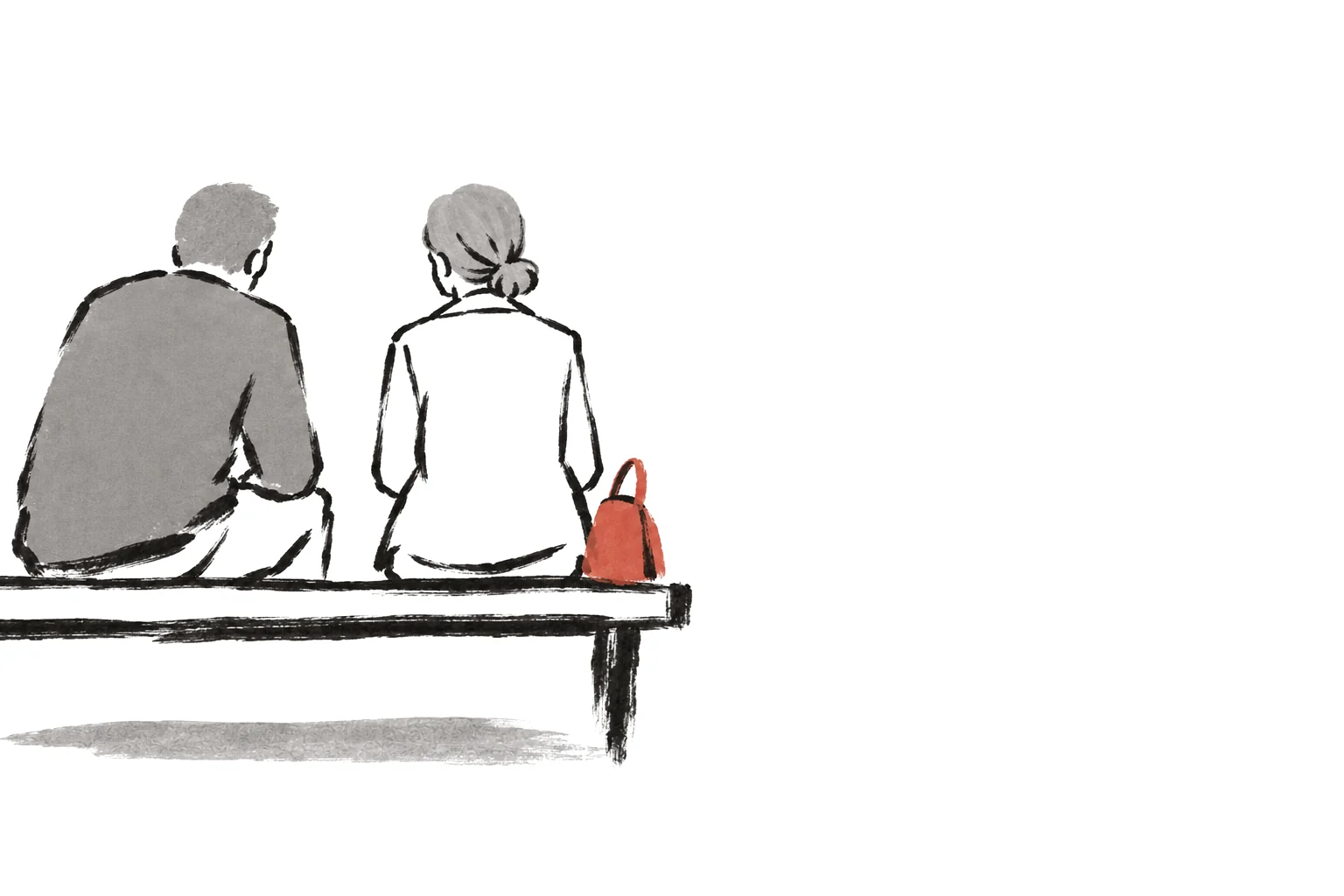
Getting on well by text does not mean getting on in person. A witty chat partner can be hard to talk to across a table, and an awkward texter can be good company. The first meet tells you which one you have, before either of you builds a wrong idea of the other.
It goes wrong in one of two ways:
- Waiting too long. You exchange messages for weeks until the interest fades and one of you stops replying.
- Moving too fast. You meet at someone's home first because weeks of talking make you feel you know them, which puts more weight on a first meeting than it can carry.
In the first case you never learn whether the real person matches the one online, and in the second you learn it in the worst setting.
The Order of Steps
The order is (1) messages, (2) a short video call, (3) a public meet, and (4) whatever you both want next. Experienced people settle on it after the alternatives go wrong.
The first meet checks only two things: whether this person is who they said they are, and whether you want more of them. Keep the stakes low, because most of the awkwardness comes from treating first meets as if they decide the future.
The first meet checks only whether this person is who they said they are, and whether you want more of them.
The Conversation Phase
Message long enough to form a fair view of the person, then suggest a video call. A week or two of normal conversation is usually enough.
What to check for:
- Do they respond to what you said, or wait for their turn to talk about themselves?
- Is their pace steady, or do long silences end in sudden intensity?
- Can they agree on a time and place without fuss?
- Does their story stay the same, or do details shift between conversations?
After a couple of weeks, more messages mostly delay what you can only learn in person.
Do a Video Call Before You Meet
A short video call is the most useful step in this process. Five minutes on video shows you (1) whether they look like their photos, (2) whether they are the one who has been typing, and (3) whether the chemistry holds up live.
People who refuse a quick video call usually have something to manage: a face that doesn't match the photos, or a persona that only holds up in edited text. Someone acting in good faith finds the request normal, so treat a flat refusal as a sign they may be hiding one of those two things.
Choosing the Venue
Choose a public place, in the daytime or early evening, that you can leave without fuss.
| Venue | Why it works | Watch out for |
|---|---|---|
| Coffee shop | Cheap, sober, daytime and low stakes. Easy to keep short | Can feel like a job interview, so keep it light |
| Quiet bar | Relaxed, a drink takes the edge off, easy to leave | Avoid packed or loud bars, where you can't talk. Don't let one drink become four |
| Hotel lobby bar | Popular in the community. Public and relaxed. Things can continue upstairs if everyone wants, and nothing happens if anyone does not | Pick a busy, reputable lobby. The meet stays public until you both choose otherwise |
| A town or two over | Many people meet away from home so a vanilla friend (one outside the lifestyle) doesn't wave at them mid-introduction | More travel. Give your check-in buddy (see below) the real location anyway |
For a first meet, avoid someone's home, a hotel room, or anywhere your ability to leave depends on the other person. Most matches are who they say they are, so the rule is not about danger. It removes a pressure for both of you: neither has to work out how to leave a private space, and it is easier to tell honestly whether you get on.
The Check-In Buddy

Tell one person where you are going, who you are meeting, and when you expect to be done. It takes five minutes.
Give your buddy:
- The venue name and address
- The name and profile of the person you are meeting (a screenshot is fine)
- A time you will check in by
- A simple signal, such as "I'll text when I leave"
Sharing your live location with your buddy for a couple of hours takes thirty seconds. You will almost certainly never need it, but it is there if something goes wrong.
Reading the Chemistry Honestly
The mistake to avoid is acceleration: deciding that weeks of talking mean the meet must move things forward. In the lifestyle a first meet, like a meet-and-greet (a casual meetup for talking), carries no expectation of leading anywhere. If couples are meeting, don't settle on the first couple you talk to out of politeness, and remember the long-standing rule that women set the pace and the boundaries. Nobody is obliged to take anything further, at any point.
| Good signs | Bad signs |
|---|---|
| Conversation comes easily | You feel pressure to perform enthusiasm you don't have |
| Time passes faster than you expected | Something feels off and you can't say what |
| You are curious about them as a person | You are already planning how to leave |
Trust the second column as much as the first. Those signs are usually right, and they tend to show up early.
Many people confirm a meet and then don't show up. A no-show comes with meeting people online and says nothing about you, so don't take it personally. Have another plan for your evening and move on.
How to Decline or Leave
You don't owe a reason, an answer on the spot, or a long follow-up message. Pick the line that fits and stop there.
You spent an hour and the price of a coffee to learn what would have cost you much more to learn later.
| Situation | What to say |
|---|---|
| Leaving early | "I've got to get going, but this was really nice." |
| Went fine, but unsure | "I really enjoyed meeting you. Let me think about whether I want to take it further." |
| No spark, want to be clear | "I don't think we're the right fit, but I appreciate you meeting me." Say it once. |
Don't follow up with a long text explaining yourself. It almost always makes things worse.

People with experience count a first meet with no chemistry as a good outcome. You spent an hour and the price of a coffee to learn what would have cost you much more to learn later.
FAQs
How long should we talk before I suggest meeting?
Long enough to believe they are real and roughly who they say they are: usually one to two weeks of steady conversation, or one video call. One reason to slow down: they keep avoiding a public meet and push for somewhere private instead. It can look like eagerness. Treat it as a warning sign, and wait longer or don't go.
The first meet went well and there is real chemistry. Do we have to keep it short?
No. The short format with an easy exit is for the start of the first meet. It sets no time limit on the evening. If you both want to stay longer, that's fine. The exit was there in case you needed it.
Will asking for a video call seem paranoid?
No. The request is common and sensible, and people acting in good faith expect it. Those who object to a five-minute call usually have something to protect: photos that don't match their face, or a version of themselves that only works in text. Their reaction tells you what you need to know before you spend an evening finding out.