
This is general information, not legal advice. Laws change, enforcement is uneven, and a city ordinance often overrides a national rule. Check the current local situation before you book a trip around a venue.
Visiting a club abroad will almost never get you arrested (the exceptions are in the caution section near the end). But German clubs are licensed businesses and almost all US clubs are private members' clubs, and that difference catches people out at the door.
Legality and Visibility
Legality and visibility are separate questions, and most confusion comes from treating them as one. Clubs can be fully legal and deliberately low-key, as in the US, or legal and open, as in Germany. Ask both questions every time:
- Is it legal here? That depends on the law.
- Is it open and easy to find here? That depends on culture and policing.
Finding a club answers only the second question, so it does not tell you the club is safe to visit.
Western Europe: Legal and Open
In most of Western Europe, the law leaves consenting adults alone in private. Venues there have operated openly for decades under ordinary adult-entertainment or sex-establishment licenses, as listed businesses with addresses and websites.
| Country | Status | How it runs | Notes |
|---|---|---|---|
| Germany | Legal | Pärchenclubs as licensed businesses | Organized and professionally run |
| France | Legal | Clubs libertins, adult-entertainment licensing | Common and widely accepted |
| Netherlands | Legal | Parenclubs, municipal sex-establishment licensing | Listed openly |
| Spain | Legal | No national ban. Regional rules apply | Visible scene in major cities |
| Belgium / Denmark / Switzerland | Legal | Adult-entertainment or cantonal frameworks | Settled |
| Sweden / Finland / Austria | Legal in practice | Frameworks vary, with no national ban | Settled, with a lower profile |
The minimum age is 18 in all of these countries.
Ireland and Norway need more care. Ireland's law on sexual-entertainment venues is tighter than the continent's, with fewer venues and more legal risk for anyone running one. Norway has restrictive law on sexual services and a smaller, less transparent scene. Neither rules clubs out, but check more closely before you assume a venue is operating legally.
Germany, France, the Netherlands, Spain and Belgium have the most settled and visible scenes.
Canada: Legal by Supreme Court Ruling

Canada's legal position is the clearest anywhere, because its Supreme Court ruled on it. In R v Labaye (2005), the court overturned the conviction of a Montreal club owner. It ruled that consensual group activity among screened adults, behind what the court called code-locked doors, did not harm society and was therefore not indecent. It replaced the old community standards test, which judged morality, with a test of harm. Under that test, consenting adults in a private members' club are not indecent.
So in Canada, lifestyle clubs are ordinary businesses. Montreal, Toronto and Vancouver all have established venues. The minimum age is 18.
United States: Legal, on a Loophole
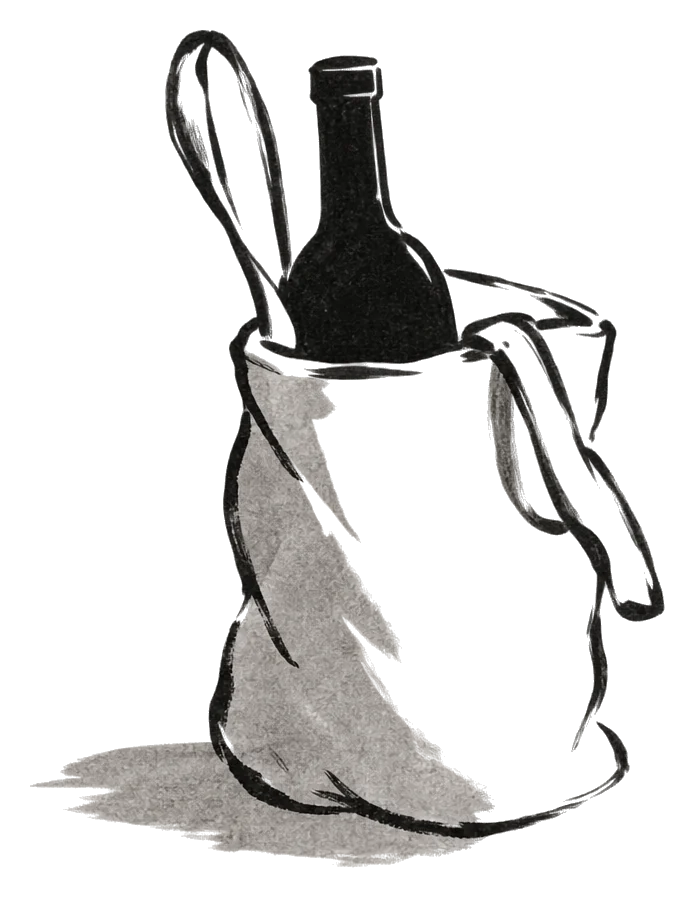
Almost all US clubs run as private membership organizations where you bring your own bottle (BYOB). Their legal position rests on two parts of that structure:
- A private club, not a public accommodation (a business open to the general public). This avoids exposure to public-obscenity law.
- You bring your own alcohol and the staff pour it. So the club needs no liquor license, which would bring in regulation that does not fit how the club runs.
In some states, charging a cover or selling tickets at the door can be read as facilitating prostitution. That is why clubs speak of membership and donations, and the careful wording is part of what keeps them legal.
There is no federal ban, and state and local law decide the rest. Florida, Nevada, Georgia and Arizona have more active scenes, largely because their rules have proved workable. In any state, zoning rules on distance from schools and churches can close a venue. Established clubs manage this risk from experience, though a club still occasionally ends up in a zoning dispute or a forced closure.
Age: 18 under federal law, but many clubs require 21 where alcohol is involved. In practice, expect to join as a member and bring your own bottle. Do not expect European openness.
United Kingdom: It Depends on the Local Council
UK venues are tolerated, and the local council decides whether one can operate, using the Sexual Entertainment Venue (SEV) license under the Local Government (Miscellaneous Provisions) Act 1982. Some councils grant these licenses and some refuse them on principle.
A club that runs only occasional events, broadly fewer than a dozen a year and spaced out, may fall below the threshold for a full SEV license, and some clubs operate this way. A club that runs events more often needs the license.
London, Manchester and other large cities have established scenes. Whether a given venue keeps running depends partly on the council's position that year, so check the specific venue as well as the national rules. The minimum age is 18.
Australia: It Depends Which State
Australia is a federation, so check state by state.
| State / Territory | Where it sits | What to know |
|---|---|---|
| Victoria & New South Wales | Permissive | Most of the visible scene, under adult-entertainment licensing |
| Queensland | Restrictive | A venue (1) cannot charge entry unless it is a licensed brothel, so it sells memberships, (2) cannot run alcohol and sexual activity at once, and (3) exposes the operator to a four-figure fine for nudity on a public dance floor. So venues are few and mostly social |
| Western Australia / South Australia / ACT | Variable | Research the specific venue before you commit |
The minimum age is 18 in every state and territory. In Victoria or NSW you are on firm ground. Elsewhere, check first.
Regions to Approach with Caution
| Region | Status | What to know |
|---|---|---|
| Middle East & Gulf states | Illegal | Penalties are severe and the legal system is not on your side. Do not look for a club |
| Southeast Asia | Hazardous | Laws can reach private adult activity, and enforcement is unpredictable: years of tolerance can end suddenly. Singapore, Malaysia and Indonesia are especially restrictive |
| Much of Africa & South Asia | Generally unfavorable | Enforcement varies so much that any visit is a gamble |

A foreign passport does not protect you in any of these places. If anything, a foreigner's arrest draws more attention.
The most dangerous assumption here is that a club running for five years must be fine. Years of survival in a hostile legal environment are not legal clearance. Check with local community sources, never with the club's own marketing.
Years of survival in a hostile legal environment are not legal clearance.
FAQs
If a club is legal in the country, can I still get in trouble as a visitor?
Usually not, since the same law covers locals and tourists. The more common problem is being turned away for lacking the right membership or paperwork. Sort out the entry requirements before you go.
If clubs are legal somewhere, are they openly advertised and easy to find?
Not always. Germany and the Netherlands list venues openly, while in the US clubs are fully legal and low-key by design. Use community directories and platforms built for this rather than a general search engine, which returns many unreliable results.
I found a club in a country you flagged as risky. Should I trust it?
Be very skeptical. A venue where the law is shaky can run quietly for years until the night the authorities step in, and you do not want to be inside then. Confirm with people in the local community before you go near it, and if you cannot confirm, do not go.
Is being poly or non-monogamous itself illegal anywhere?
Bigamy, being legally married to more than one person at once, is illegal in most countries. That law concerns marriage licensing. Loving or living with several partners without claiming more than one marriage is generally not a crime in the West. The legal problems in this guide almost all concern venues and public activity.