
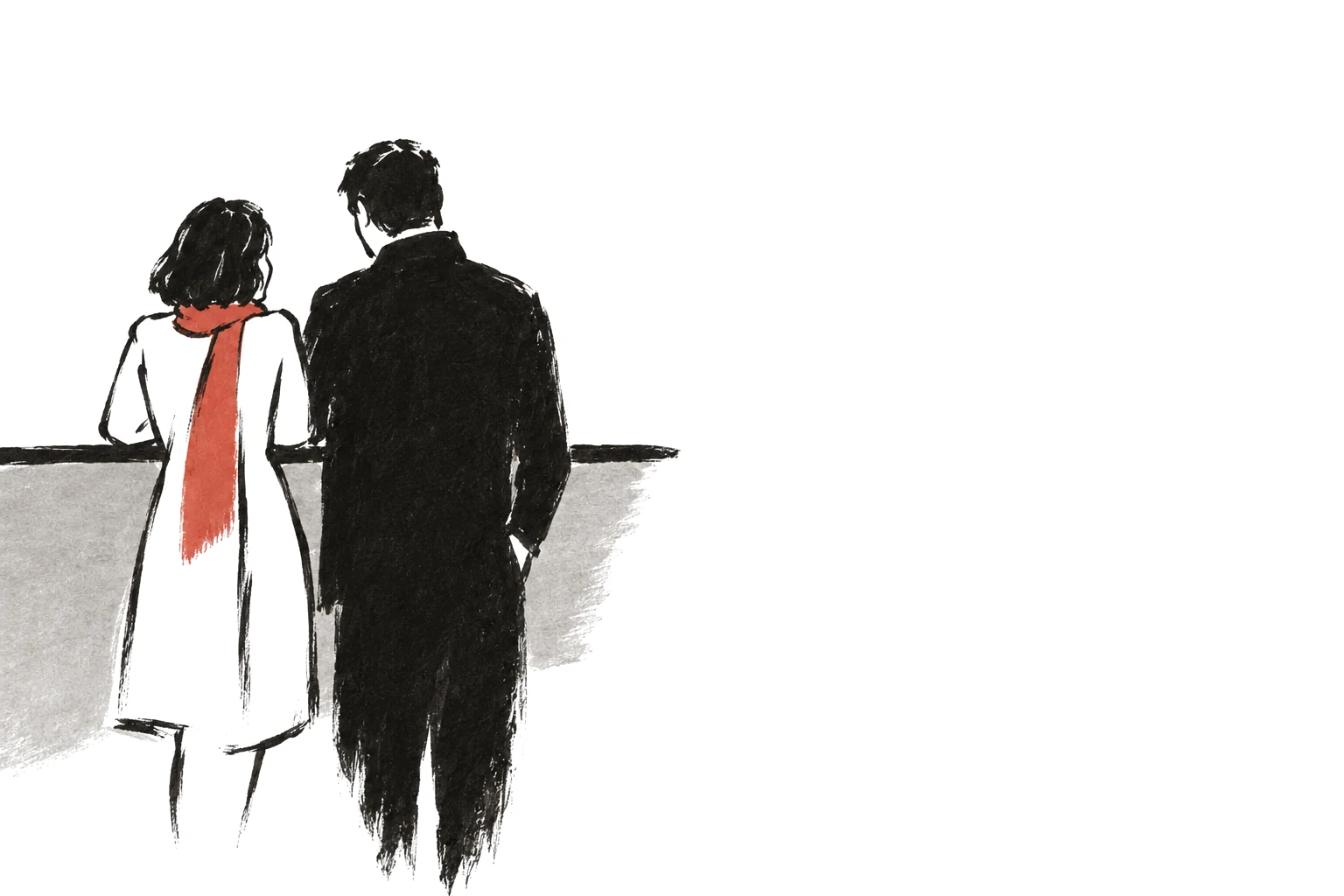
At the door you get a dress code and perhaps a laminated sheet of house rules. The rules that decide whether anyone wants to see you again are not on that sheet. Regulars follow them, and newcomers are expected to learn them by watching, without drawing attention to themselves. This guide writes them down.
Consent Signals
The lifestyle relies on more explicit consent than ordinary social life does. Ask before you touch, every time. Assume that every person in the room means no until they say otherwise, whatever they wear and whichever room you are in.
You need to read three signals. Newcomers often miss the middle one, the soft no, and it causes the most trouble.
| Signal | What it looks like | What it means | Your move |
|---|---|---|---|
| Green | Steady eye contact, body turned toward you or leaning in, questions back, and they moved closer themselves | Keep talking. Touch needs a separate yes, which you don't have yet | Stay social and let it build |
| Soft no | Polite answers, no questions back, bodies angled away, one partner glancing at the other to check in | A no, said politely so nobody has to be rude | Wind down warmly and move on |
| Hard no | A direct spoken decline, or a raised palm | A no, with nothing to negotiate | Say "Thank you, have a great night" and move away |
A couple who keeps bringing the conversation back to you is inviting you to keep talking. Don't take it as permission to reach across the table. People go wrong with the soft no because they want it to be a maybe. A soft no is a no, and anyone who can't accept a polite no does not belong at a club. On a hard no, the correct response is one sentence. Don't ask whether they are sure, offer something else or look hurt.
Anyone who can't accept a polite no does not belong at a club.
One rule covers every situation: if you are wondering whether you have consent for a physical move, you don't have it yet.
Room and Door Signals
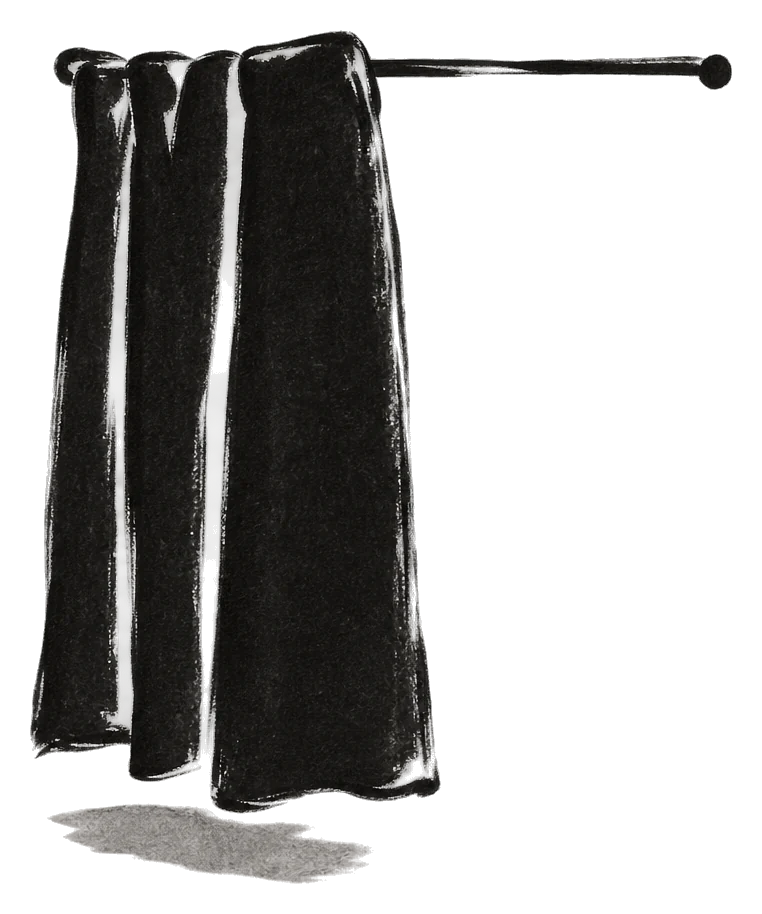
Many clubs use the door of a private room to show whether the people inside are open to company. The one mistake that gets you walked out is treating permission to look as permission to enter.
| What you see | What it means |
|---|---|
| Open door or open curtain | Lookers are welcome. Glance in, catch someone's eye and see whether anyone invites you in |
| Half-closed curtain | Watch from a respectful distance unless someone clearly waves you in |
| Closed door | Not open to company. Don't touch the handle |
Some clubs also use wristbands or tokens to show who is open to company. Read the house rules when you arrive, because a wrong guess here can get you quietly escorted out.
A couple whose attention is fully on each other is not inviting anyone in, so leave them to it.
How to Approach
Always start in the social area. A good approach is two couples talking at a bar. Let interest build during the conversation instead of announcing it.
Two rules cover most of it:
- Ask questions rather than make statements. A couple who spends twenty minutes making you laugh is far ahead of one who opens with "we think you're both hot". That opener skips the conversation, which is the part that works.
- Make eye contact with both people. If you play to one partner and ignore the other, the couple loses interest. Ignoring half a couple is the newcomer mistake that ends conversations fastest.
How to Decline
Always decline politely. "You're both lovely, but we're keeping to ourselves tonight" is a complete and kind answer. Three things spoil it:
- A visible grimace.
- A whispered exchange with your partner that the other couple can see.
- A vague answer meant to keep the door open without committing to anything.
The vague maybe feels polite, but it wastes the other couple's evening and leaves them guessing.
When you hear a no, some people in the community reply "thank you for taking care of yourself". The community is small and its members know each other, so how you decline matters too: people often remember it longer than they remember who you said yes to.
Hygiene
Hygiene is required, though people seldom discuss it. Shower just before you leave the house, not that morning. Pack a travel deodorant for a long night. If you are not sure about your breath, use mouthwash: clubs often keep it in the bathrooms.
Nobody will tell you to your face that you are the problem, but they will be busy every time you come over, and that impression lasts. Trim and groom out of respect for the people who will be close to you.
The No-Phone Rule
People often break this rule once. If you do, apologize and put the phone away at once.
Phones are off in play areas, with no exceptions. In social areas the rule varies by club, but anywhere you can see another guest undressed or intimate, put the phone away: in the locker, your pocket or the car. Face down or on silent is not away.
The rule protects other guests, who cannot tell whether you are checking the time or pointing a camera at them.
The person across the room has no way to know whether you are checking the time or pointing a camera at them.
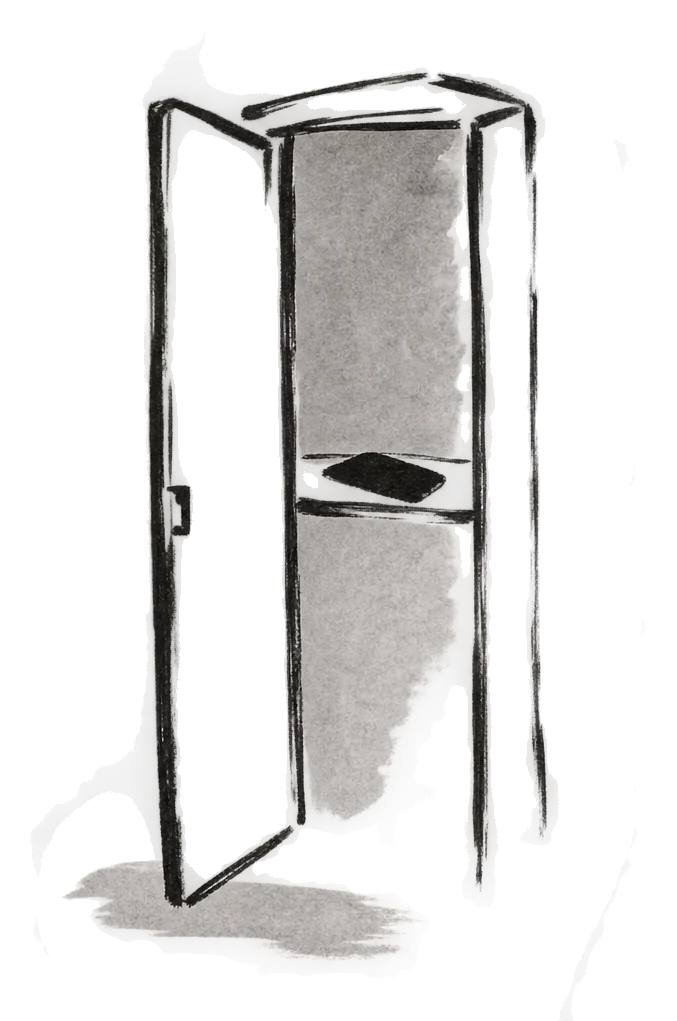
Many guests have careers, families and communities that one photo could damage. Clubs give nobody the benefit of the doubt over photos. People in the community still tell of a couple who took photos in the locker room on arrival and were walked out before they reached the dance floor. Leave the phone in the locker and wear a watch.
Single-Male Etiquette
Many clubs admit single men only by exception, through (1) caps on numbers, (2) screening, (3) references or (4) invitations. Getting in means you met the club's conditions. Once you are inside, your reputation starts again from zero.
| Do | Don't |
|---|---|
| Be social first, before anything else | Hover near couples in play areas. Lurking looks predatory even when it isn't |
| Accept every no at once and completely, the first time | Work the room one person after another. Women notice the man doing rounds within minutes |
| Wait to be invited | Mistake mild persistence for patience |
Be clear on the last row. Patience means you wait until someone invites you. If you keep asking, even gently, that is persistence.
Your reputation is what separates you from the single men who get banned. Clubs move fast to protect their guests from the man who gets this wrong, because they have met him many times. The single men who get included are warm, patient and at ease with "not tonight". That takes time.
The Exit
Leave on good terms and thank the hosts. If you made friends, tell them: "this was great, hope we see you again". They will remember it. After sex, keep things light and simple, and don't linger over the other person trying to create a moment. People came to relax, so keep the goodbye short and warm.
You become a regular, greeted by name at the door, by getting these basics right on every visit.
FAQs
What should we do if someone near us is clearly breaking etiquette?
Don't deal with it yourself unless there is an immediate safety issue. Tell a staff member quietly. Clubs have seen every kind of bad behavior and act fast, because protecting their guests is their job. Correcting other adults is the venue's responsibility, and a good venue wants to know.
Is it rude to turn down someone who's been kind and friendly all night?
No. Being friendly does not commit anyone to a yes, and the culture is built to keep out people who act as if it does. Being warm all evening and then giving a clear, polite no is how the system is meant to work. The awkwardness people expect almost never comes when the no is said kindly and without apology.
What if we break a rule by accident, such as taking out a phone in the wrong place?
Apologize in three words and fix it at once: "sorry, putting it away", then put it away. Don't make a speech, justify yourself or explain what you were really doing. Many venues treat a first honest mistake as an accident. That tolerance does not cover arguing about it.